
AI-assisted development is no longer a novelty agencies can evaluate from a distance. Clients are already asking about it. Some are using it without telling you. And the tools have matured enough that the question is no longer “should we explore this” but “how do we use it without creating problems we can’t bill to fix.”
This guide breaks down the real tradeoffs for agencies and their clients across four AI development scenarios: websites, chatbots, SaaS products, and mixed feature implementations. The goal is a practical read, not a feature tour.
AI-Built Websites
What Does AI-Assisted Website Development Actually Change for Agencies?
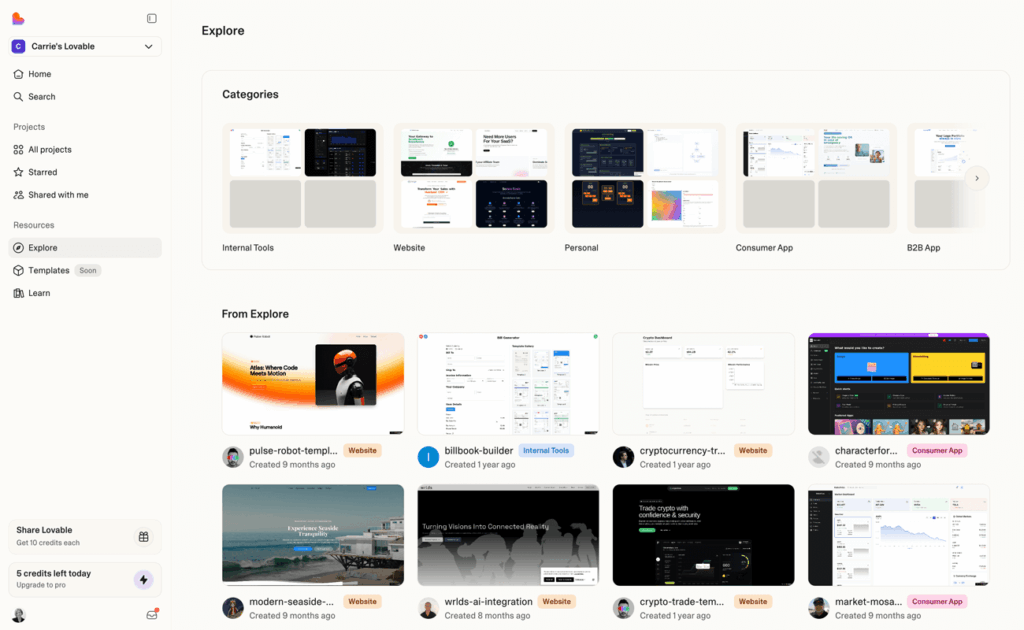
Tools like Relume, Framer AI, and Lovable can produce a functional site structure and page layout in hours rather than days, compressing early project phases significantly. Routine page builds, service pages, landing pages, contact forms, require less junior developer time when AI handles the scaffolding. That margin can either widen or be reinvested in higher-value deliverables.
Faster iteration cycles also change how discovery works. AI-generated variations let agencies present multiple design directions early without committing senior hours to each option. And for early-stage clients who need proof-of-concept sites before committing to full builds, AI-assisted rapid prototyping can become a distinct, billable service line.
What agencies give up:
- Output consistency. AI tools produce usable output on predictable projects and surprising messes on anything unusual. Agencies that pass AI-generated code directly to clients without review create liability they may not see until a site crashes or a security issue surfaces.
- IP clarity. The intellectual property status of AI-generated code and design output is not fully settled. Clear contract language about what you are and are not warranting is no longer optional.
- Differentiation. When a client can use the same AI tool to build a site themselves, the value proposition of your agency shifts entirely to judgment, strategy, and quality control. Agencies that have not made that shift are already exposed.
- Hosting compatibility. AI-generated WordPress builds frequently include plugin combinations and theme frameworks that perform adequately on demo environments and poorly in production. Your agency absorbs that complaint.
What Do Clients Gain from AI-Built Websites?
Lower project costs on straightforward builds. Faster time to launch for campaigns with tight timelines or funding events. More design options earlier in the process, which tends to reduce expensive revision cycles.
What clients give up:
- Differentiation. AI site builders optimize for the center of the distribution. The result is a site that functions but does not set the client’s business apart from anyone else in their category.
- Performance. Auto-generated code is frequently verbose, unoptimized, and front-loaded with render-blocking scripts. Core Web Vitals scores, crawlability, and organic search performance can all suffer.
- Accurate ownership expectations. Clients who believe they own a fully custom site that was primarily AI-generated may discover unexpected limitations when they try to modify, migrate, or scale it.
AI-Built Chatbots
What Do Agencies Actually Gain from AI-Built Chatbots?
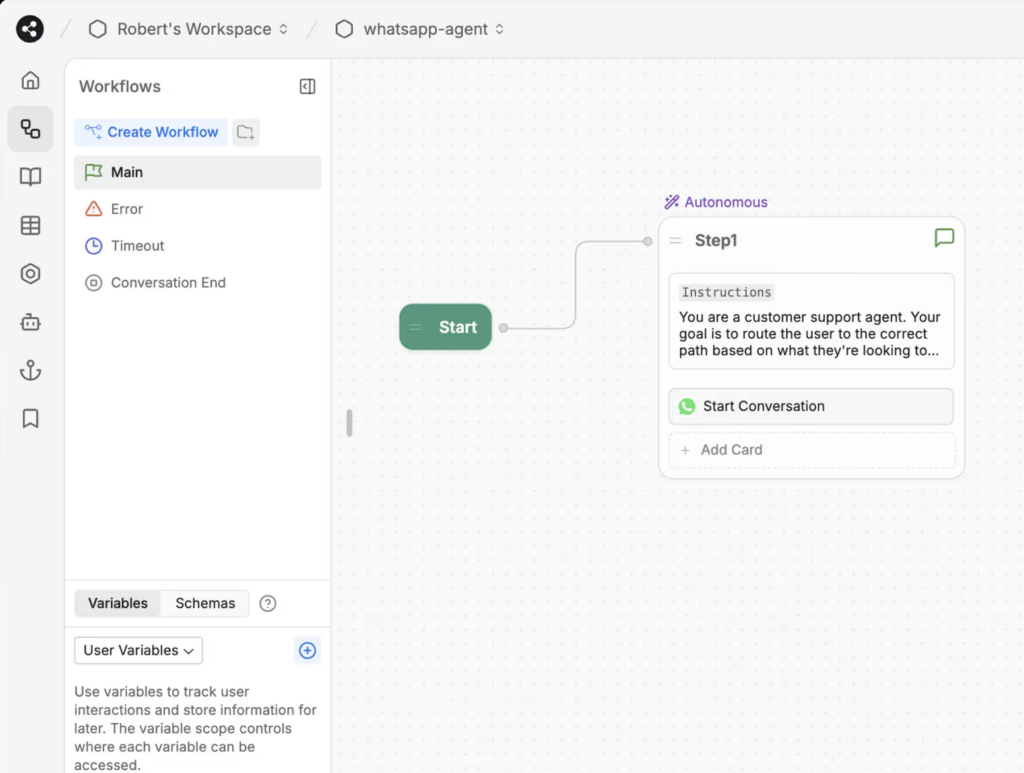
Chatbot deployment, training, and maintenance is one of the cleaner ways for agencies to build a retainer-based service line. The bots need ongoing attention; clients usually do not want to manage it themselves. Platforms like Botpress, Voiceflow, and Tidio have brought no-code and low-code chatbot development within reach of agencies that are not primarily engineering shops.
Chatbots are also one of the more straightforward AI deliverables to connect to client business outcomes: ticket deflection rates, lead capture volume, support cost reduction. That makes them easier to scope, sell, and justify at renewal.
What agencies give up:
- Accuracy control. Chatbots trained on client content and powered by large language models can produce confident, wrong answers. For clients in healthcare, legal, financial services, or regulated industries, that is a liability exposure that falls on whoever built and deployed the tool.
- Low maintenance overhead. A chatbot is only as accurate as the content it references. Agencies that deploy bots without establishing a knowledge management workflow for the client are building something that degrades over time.
- Managed expectations. The gap between what a client believes an AI chatbot can do after a demo and what it reliably does in production is significant. Managing that expectation is ongoing work, not a handoff item.
- Simple project scope. Chatbots that need to connect to CRMs, ticketing systems, or e-commerce platforms require backend access and API work that can substantially increase project scope.
What Do Clients Gain from AI-Built Chatbots?
For SMBs that cannot justify around-the-clock support staff, a well-configured chatbot handles routine inquiries, lead qualification, and FAQ deflection at a fraction of the labor cost. Research from Harvard Business Review has shown that response time to inbound inquiries directly affects conversion rates, and a chatbot responding in seconds versus a human responding in hours is a material sales advantage. A chatbot also handles one conversation and one thousand conversations with the same infrastructure overhead, which matters for clients with seasonal demand spikes.
What clients give up:
- Tolerance for failure. Users who cannot get past a chatbot to reach a human tend to leave. For e-commerce clients or service businesses where the transaction value is high, a poorly designed bot is not a neutral experience; it actively costs revenue.
- Set-it-and-forget-it operation. A chatbot that launches accurately and then goes unmaintained becomes a source of wrong information over time. Clients who do not budget for ongoing updates own that problem.
- Simple compliance posture. Chatbots that collect personal information, even informally through conversation, create compliance obligations under GDPR, CCPA, and sector-specific regulations. Most clients underestimate this on day one.
AI-Built SaaS Products
How Does AI Change the Economics of Building SaaS Products?
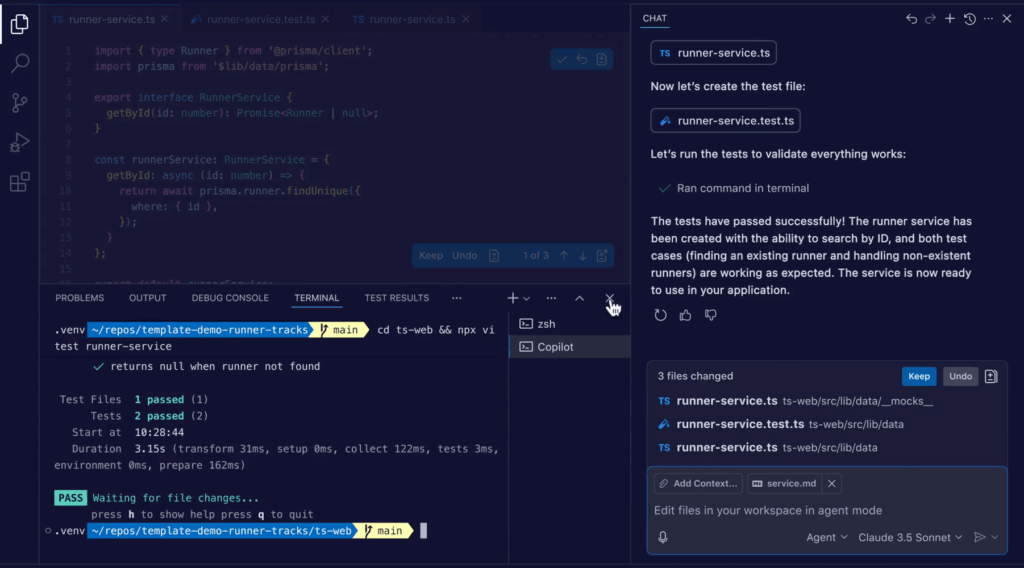
AI coding assistants like GitHub Copilot and Cursor meaningfully accelerate core feature development. A small engineering team can now output what previously required a larger one. That opens access to client types who would not have engaged a traditional web agency before: funded startups, internal tools teams at mid-size companies, vertical SaaS founders. And SaaS builds are scoped and priced differently than marketing sites. The involvement of AI tooling does not reduce project value when your agency is providing architecture, product thinking, and ongoing development support.
What agencies give up:
- Distance from infrastructure accountability. SaaS products have uptime expectations, data integrity requirements, and security obligations that marketing sites do not. When an agency builds and hosts a client’s SaaS product, they are in the infrastructure business whether they have positioned themselves that way or not.
- Trust in AI-generated code. GitHub Copilot and similar tools write plausible code that may contain security vulnerabilities, inefficient database queries, or logic errors that surface under load. Shipping AI-generated code without thorough review is building technical debt into a client’s core product.
- Defined scope boundaries. SaaS products evolve constantly. Agencies that do not establish clear boundaries around feature scope, support, and infrastructure responsibility will find those projects consuming disproportionate resources over time.
- Infrastructure simplicity. A prototype that ran comfortably on a shared environment will not survive production traffic. Agencies that do not architect for scale early will need to rebuild hosting strategy mid-engagement, which is both expensive and disruptive.
What Do Clients Gain from AI-Assisted SaaS Development?
A funded founder who would previously have spent six months getting to a working beta can now get there in six to eight weeks with the right agency and AI tooling in place. For early-stage companies, that acceleration directly affects fundraising timelines and market validation. AI-assisted development also reduces the raw hour count on predictable, well-specified features, which matters for clients with limited runway. And modern AI tooling gives smaller development teams access to capabilities, intelligent search, content generation, predictive recommendations, anomaly detection, that would have required dedicated ML engineering teams to build just a few years ago.
What clients give up:
- API independence. SaaS products built on third-party AI APIs (OpenAI, Anthropic, Google AI) are subject to pricing changes, rate limits, and deprecation schedules outside the client’s control. A pricing change at the API layer can materially affect product unit economics overnight.
- Cost predictability at scale. Token-based API pricing scales with usage. A product that is cheap to run in beta can become expensive to operate at scale in ways the original budget did not anticipate.
- Portable, documented code by default. AI-generated codebases are often neither clean nor documented. Clients who want to bring development in-house or switch agencies need to establish code ownership and documentation standards at the start of the engagement, not after the fact.
Mixed Solutions: AI Features in Existing Websites and Products
What Makes Mixed AI Implementations the Fastest-Growing Category?
Clients do not always want an AI-first product. They want their existing site or application to do more, with AI features layered in: search, personalization, content generation, recommendations, or support automation. This is the fastest-growing category, and it carries its own set of real tradeoffs.
For agencies, adding AI features to an existing client site is a natural extension of the relationship with lower sales friction than landing a new project. Implementations can be scoped as discrete projects, which suits both agency capacity and client budget cycles. A single AI-powered feature, like semantic site search replacing a basic keyword search, can produce measurable engagement improvements that justify further investment.
What agencies give up:
- Clean integration surfaces. Bolting AI features onto existing systems means dealing with whatever technical debt already exists in the client’s stack. The “simple AI feature” that requires database schema changes, API refactoring, and performance tuning is a common scenario.
- Performance headroom. AI features frequently add latency. Inference calls to external APIs, client-side JavaScript for AI-powered widgets, and additional database queries all affect page speed. On a site with already marginal Core Web Vitals scores, new AI features need to be introduced carefully.
- Standard QA workflows. Mixed solutions require testing not just for functionality but for the quality and accuracy of AI outputs across a range of inputs. That is a different testing discipline.
For clients, mixed implementations mean incremental investment without a full platform rebuild. There is no migration event, no content move, no SEO reset. And for clients whose competitors are shipping AI-powered features, the ability to add comparable capabilities to a running platform quickly is a meaningful business priority.
What clients give up:
- Low user expectations. Once your site has AI-powered search, users expect it to work well every time. A degraded AI experience is often perceived as worse than no AI at all, because users interpret it as the business not caring rather than a tool having a bad day.
- Data quality abstraction. AI features connected to a client’s existing data are only as useful as that data is accurate, current, and structured. Clients with messy product catalogs, outdated knowledge bases, or inconsistent CRM data will see that reflected in their AI outputs.
- Infrastructure headroom. Serving AI features at scale requires more compute resources than serving static content. Clients who add meaningful AI capability to high-traffic properties without upgrading their hosting infrastructure will see performance degradation under load.
Why Infrastructure Is the Conversation Agencies Are Not Having
“Every AI integration creates new infrastructure requirements. AI features add latency. They add compute demand. They add storage requirements for model outputs, training data, and logging. And they fail in unpredictable ways when the underlying server environment cannot keep up.”
That is the conversation agencies rarely have with clients during the discovery phase, and it is the one that causes the most friction six months post-launch.
Agencies managing AI-integrated client sites on shared hosting environments will hit resource ceilings they did not anticipate. A chatbot that works in staging hits rate limits under production traffic. An AI-assisted e-commerce site that loads in 1.2 seconds on a demo server loads in 4.8 seconds after launch because the inference calls to an external API are queuing behind inadequate uplink capacity.
The infrastructure layer is not an afterthought in AI development. It is a constraint that shapes what AI features can perform reliably and at what traffic volumes.
Agencies building AI-integrated products for clients need a hosting partner who understands what those workloads actually require: dedicated compute that does not share resources with dozens of other tenants, port speeds that do not become a bottleneck on API-heavy architectures, and a support team that can diagnose infrastructure-level performance problems rather than pointing to application-layer logs.
For clients whose websites, SaaS products, or AI-integrated applications are central to their business operations, the hosting infrastructure is not a commodity decision. It is a performance decision. And it is one most agencies have more influence over than they realize.
Before You Scope the Next AI Project: A Quick Reference
| AI Scenario | Best Agency Use Case | Client Benefit | Biggest Risk | Infrastructure Need |
|---|---|---|---|---|
| AI-Built Websites | Rapid prototyping, service pages | Faster launch, lower cost | Generic output, performance debt | Standard VPS or managed WordPress |
| AI Chatbots | Retainer service line | 24/7 coverage, lead capture | Hallucination, compliance exposure | API rate limit headroom, uptime SLA |
| AI SaaS Products | MVP builds, vertical SaaS | Faster to market | Code quality, vendor lock-in | Dedicated compute, scalable storage |
| Mixed AI Features | Client retention, upsell | Incremental value, no rebuild | Latency, data quality dependency | Higher-tier hosting with dedicated resources |
Agencies looking for an infrastructure partner built for AI-integrated client environments can explore InMotion Hosting’s Agency Partner Program, which includes dedicated account support, scalable VPS and Dedicated Server options, and a structured partner tier program built for agencies managing complex, multi-client hosting portfolios.