

cPanel license pricing and the April 2026 CVE-2026-41940 zero-day have pushed more sysadmins to take a serious look at alternatives. This guide compares six free, open-source panels worth installing on a VPS or dedicated server in 2026, with honest notes on stability, security history, and when staying on managed cPanel hosting is the smarter call.
Why Are People Looking for cPanel Alternatives in 2026?
Three forces keep this conversation alive. cPanel’s per-account pricing model continues to squeeze self-managed VPS and dedicated server budgets, especially for operators running many small accounts. The open-source panel ecosystem has matured, with active forks and modern architectures that did not exist five years ago. And a string of high-severity cPanel & WHM vulnerabilities, including the April 2026 pre-auth authentication bypass that earned a CVSS 9.8 score, has reminded operators that running any control panel means owning the patch cycle.
Self-managing a free panel removes the license cost but transfers the security responsibility to you. That trade-off is fine if you have the time and skill. It is not fine on a server that quietly runs a customer’s checkout flow.
What Is HestiaCP and Why Did It Replace VestaCP?
If you read older articles recommending VestaCP, skip it. The last VestaCP release was in January 2022 and the project is no longer actively maintained. The community migrated to HestiaCP, an active fork that kept the Vesta workflow and rebuilt the rest.
HestiaCP runs an NGINX reverse proxy in front of Apache or PHP-FPM, with native Let’s Encrypt, Fail2ban, and an integrated file manager that used to cost extra on Vesta. It supports Ubuntu and Debian only and is fully free and open source under GPL v3.
What you get:
- Modern, mobile-friendly UI with multi-PHP support
- Native Let’s Encrypt and Fail2ban
- Built-in file manager and DNS server
- Active development on GitHub
What to know:
- No RHEL-family support (AlmaLinux, Rocky, RHEL)
- Email stack is functional but lighter than a full cPanel install
- You are still on the hook for OS-level hardening
HestiaCP is the right starting point for small operators who want a free, modern panel with a familiar layout and a real maintainer behind it.
Is Webmin and Virtualmin Still a Good cPanel Alternative?
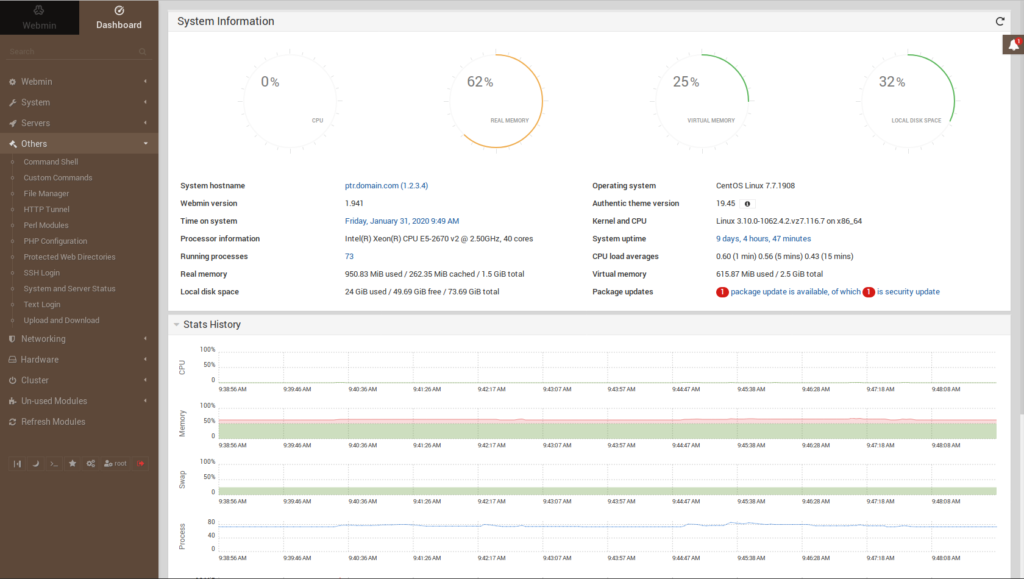
Yes, and the picture has improved since 2022. Webmin 2.x ships regular releases, and Virtualmin GPL is the multi-tenant layer that turns Webmin into something closer to cPanel.
Strengths:
- Cross-distro support including AlmaLinux 9, Rocky 9, Debian 12, Ubuntu 22.04 LTS, and FreeBSD
- Hundreds of modules covering everything from BIND and MariaDB to mail and firewall management
- Virtualmin Pro adds reseller-style accounts, branding, and commercial support
Trade-offs:
- The UI is dense and dated compared to HestiaCP
- Some third-party modules have not been updated in years, so vet add-ons before installing
- Multi-server orchestration is possible but requires a learning curve
Pick Webmin/Virtualmin when you want maximum control across mixed distributions and you are comfortable in the terminal. It is the most flexible option on this list, and arguably the most mature.
What Is Control Web Panel (CWP) and Is It Safe to Use?
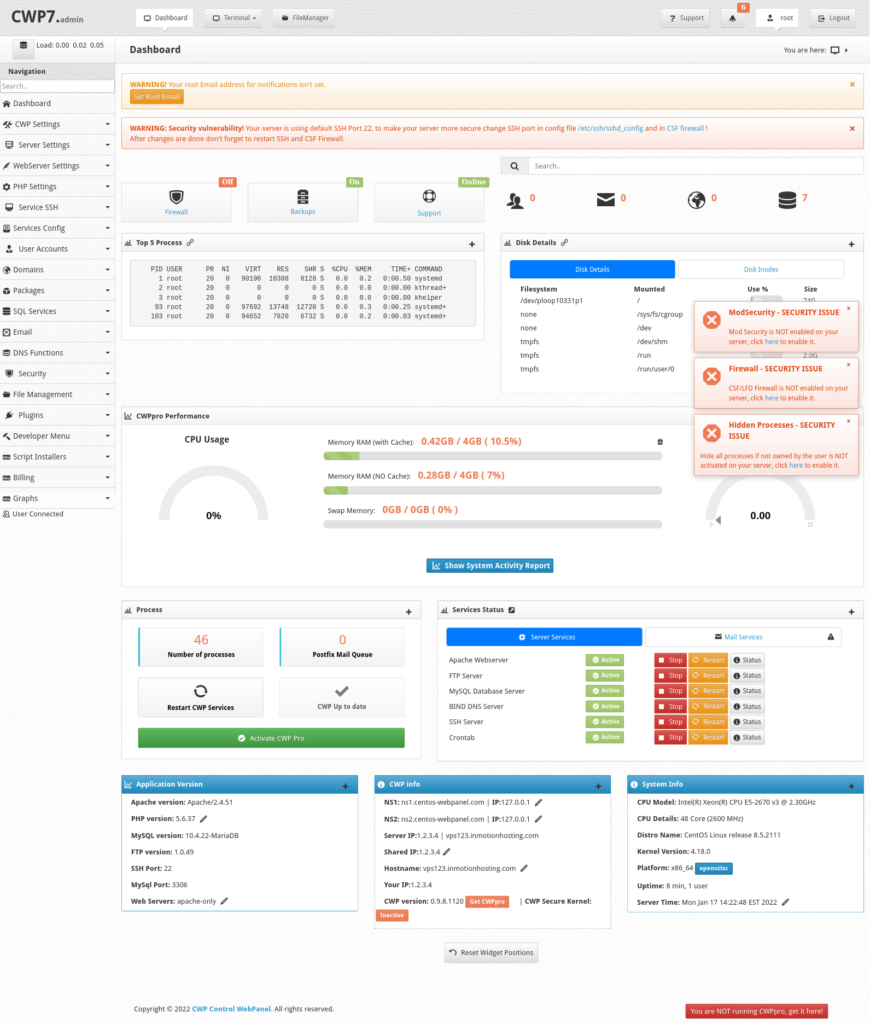
Control Web Panel (formerly CentOS Web Panel) targets the RHEL-family operator who wants a workflow closest to cPanel without paying for cPanel licenses. It supports AlmaLinux 9 and Rocky 9, and includes built-in integrations for ConfigServer Security & Firewall (CSF) and ClamAV.
Be honest about its security record. CVE-2022-44877 was an unauthenticated remote code execution vulnerability in CWP that was actively exploited in the wild. The team has patched and improved disclosure cadence since, but the takeaway is the same as with any panel: keep it on the latest build and follow the project’s security advisories.
CWPpro paywalls features that are genuinely useful, including the PHP Selector and higher user counts. If you are running a small handful of sites on a VPS, the free tier is workable. If you scale past that, the pro license costs add up.
When Does Cockpit Make Sense as a cPanel Alternative?
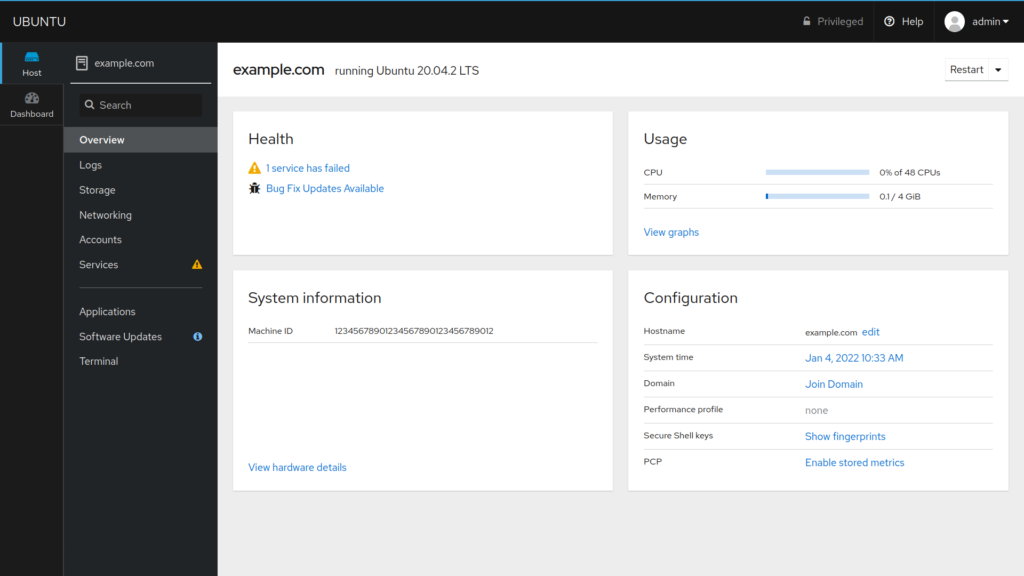
Cockpit is not a hosting panel. It is a Linux server management interface that Red Hat backs and ships with RHEL, AlmaLinux, Rocky, and Fedora. Think of it as a graphical layer over the system administration tasks you would otherwise do over SSH.
Where Cockpit fits:
- Managing the underlying OS, services, storage, and networking on a server
- Inspecting Podman containers or libvirt virtual machines
- Performing live performance diagnostics without dropping into the terminal
Where it does not fit: creating cPanel-style website accounts with email, FTP, and DNS in one click. Pair Cockpit with HestiaCP or Virtualmin if you want both system management and a hosting workflow. It also stands on its own for non-web workloads, like a small application server or an internal database box.
What Is the Difference Between ownCloud and Nextcloud in 2026?
Both are self-hosted file sync and share platforms, and both have changed since the original ownCloud-vs-Nextcloud articles were written.
ownCloud is now part of Kiteworks and ships two products: ownCloud Classic, a PHP application that was recently upgraded to PHP 8.3, and ownCloud Infinite Scale (oCIS), a cloud-native rewrite in Go with a microservices architecture. In May 2026, Kiteworks announced a formal Open Source Program Office for ownCloud, relicensed over 100 projects to Apache 2.0, and published a governance charter. oCIS is the more interesting platform for new deployments because it scales horizontally and is built for container orchestration.
Nextcloud forked from ownCloud in 2016 and has built out the broader ecosystem, including Nextcloud Talk for video, Collabora Online for documents, Deck for kanban, and a large third-party app store. For most teams looking for a self-hosted Google Workspace replacement, Nextcloud’s plugin breadth is the deciding factor.
Pick oCIS if you are building a large-scale, container-native file platform. Pick Nextcloud if you want a single self-hosted suite covering files, calendars, chat, video, and office collaboration out of the box.
How Do These Six Panels Compare at a Glance?
| Panel | Best For | OS Support | License |
|---|---|---|---|
| HestiaCP | Small operators who want a modern cPanel workflow | Ubuntu, Debian | GPL v3 (free) |
| Webmin / Virtualmin | Cross-distro flexibility and deep configuration | AlmaLinux 9, Rocky 9, Debian 12, Ubuntu 22.04 LTS, FreeBSD | GPL (free), Pro available |
| Control Web Panel | cPanel-like workflow on RHEL-family OS | AlmaLinux 9, Rocky 9 | Free tier, CWPpro paid |
| Cockpit | OS and infrastructure management, not hosting | RHEL family, Debian, Ubuntu | LGPL (free) |
| ownCloud Infinite Scale | Cloud-native file platform at scale | Container-first | Apache 2.0 (free) |
| Nextcloud | Self-hosted suite for files, chat, video, office | Linux (broad) | AGPL (free), Enterprise paid |
When Is It Better to Stay on Managed cPanel Hosting?
Running a free panel on an unmanaged VPS works until the day it doesn’t. On April 28, 2026, watchTowr Labs disclosed CVE-2026-41940, a CVSS 9.8 pre-auth authentication bypass in cPanel & WHM that affected an estimated 1.5 million servers worldwide. CISA added it to the Known Exploited Vulnerabilities catalog two days later.
That kind of disclosure is what separates self-managed hosting from managed hosting in practice. On a self-managed HestiaCP or CWP box, the clock for noticing, validating, patching, and verifying is yours. On a managed cPanel server at InMotion Hosting, the same in-house network operations team that built the network closed the vulnerable ports at the edge of three data centers within hours of disclosure, then iterated patches across the fleet. 99% of potentially affected customers stayed online without action.
That response is possible because the company owns the global infrastructure end to end. There is no hyperscale provider in the middle. The same people who run the network run the patch validation and the customer outreach.
InMotion Premier Care bundles the operational layer that makes managed cPanel hosting worth it:
- Monarx malware defense across the account
- 300GB backup storage on VPS, 500GB on Dedicated
- 24/7 Advanced Product Support priority on VPS
- 1 hour per month of InMotion Solutions consulting on Dedicated
If your team has the time and the skill to own a control panel, HestiaCP or Virtualmin is a fine place to start. If your site is the business and you would rather not be on call during the next zero-day, run cPanel on a Managed VPS or Managed Dedicated Server with Premier Care attached, and let an in-house team handle the patch cycle. Talk to our sales team to size the right plan.